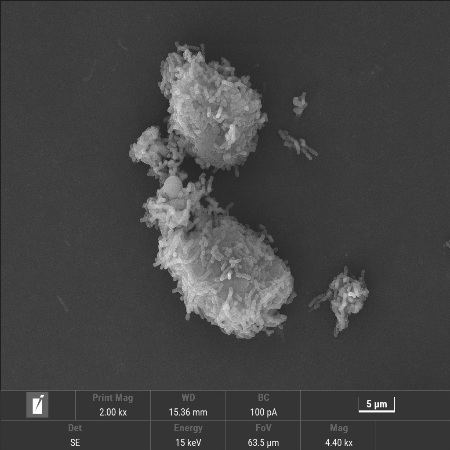
FABIOTICS’ Proprietary Strain DePlastox™ Lactiplantibacillus plantarum PD01 Granted National Invention Patent
FABIOTICS' Proprietary Strain DePlastox™ Lactiplantibacillus plantarum PD01 Granted National Invention Patent
FABIOTICS' proprietary strain DePlastox™ Lactiplantibacillus plantarum PD01 has been granted a national invention patent. The patent covers a Lactiplantibacillus plantarum strain PD01 with unique anti-microplastic functions. It can not only impede microplastics from crossing the intestinal barrier, but also alleviate obesity and inflammatory responses caused by excessive microplastic intake.
DePlastox™ Lactiplantibacillus plantarum PD01
Strain Source: Healthy adult gut
Colony Morphology: Milky white, circular, opaque, smooth and moist surface, raised center, entire margin
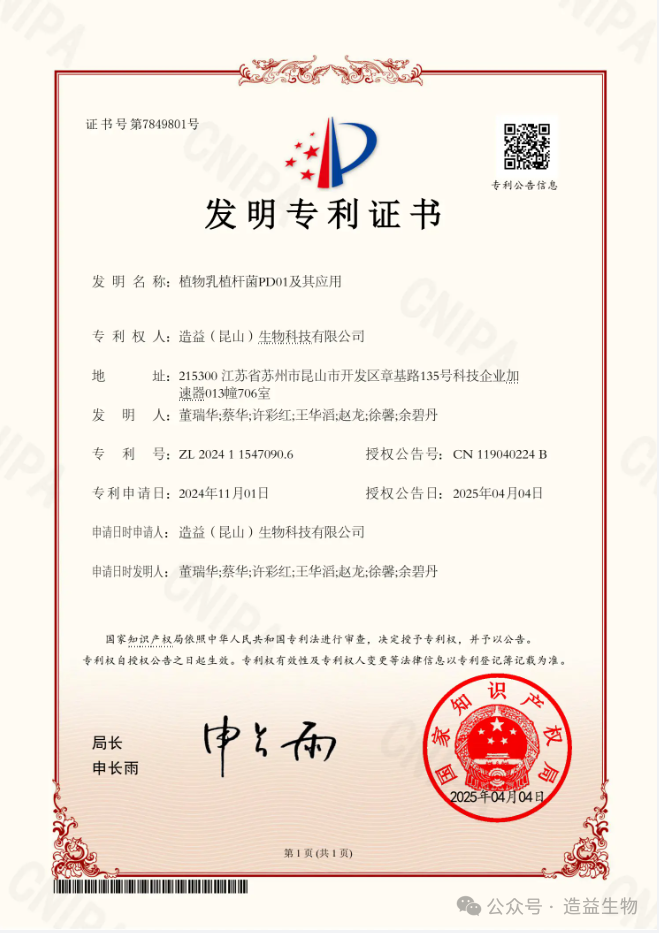
Patent Grant No.: ZL 202411547090.6
FABIOTICS Deeply Engaged in In-Body Microplastic Solutions
University-Industry Collaboration for Continuous Innovation
Microplastics generally refer to plastics with a particle size of less than 5 mm. They are defined by the state as emerging pollutants. They are widely distributed, difficult to degrade, and have a large specific surface area that easily adsorbs harmful pollutants, posing a serious threat to the ecological environment and human health. Studies have shown that microplastics ingested by humans can cross the intestinal barrier into the bloodstream and accumulate in multiple tissues and organs, bringing new risks to human health.
Core members of the FABIOTICS team have devoted years to developing in-body microplastic solutions. They previously led the development of first-generation "microplastic-excreting" probiotics such as DT88, which primarily work through an "adsorption-dropout" mechanism.
In September 2024, FABIOTICS and Lanzhou University jointly published a population observational study, revealing that frequent takeout consumption among young people increases microplastic intake, thereby altering gut microbiota and increasing obesity risk.
In November 2024, FABIOTICS and Jiangnan University jointly published a review article, revealing the mechanism by which the gut microbiota-gut-brain axis plays a role in microplastic-induced brain injury.
In April 2025, FABIOTCIS, in collaboration with Dong Ruihua's team at Fudan University, jointly developed the human-derived probiotic strain Lactiplantibacillus plantarum PD01, which can impede microplastics from crossing the intestinal barrier and alleviate microplastic-induced obesity and inflammation. The strain was granted a national invention patent.
References:
1. Twenty years of microplastics pollution research—what have we learned? Science.(2024).
2. Microplastics in the human body: A comprehensive review of exposure, distribution, migration mechanisms, and toxicity. Science of The Total Environment. (2024)
3. https://www.biodiscover.com/industry/742063.html
4. Take-out food enhances the risk of MPs ingestion and obesity, altering the gut microbiome in young adults. Journal of Hazardous Materials. (2024).
5. Innovative mechanisms of micro- and nanoplastic-induced brain injury: Emphasis on the microbiota-gut-brain axis. Life Sciences.(2024).